Construction sites in India expose workers to high noise levels that may come from drilling, concrete processing, excavation, or heavy machinery that keeps running throughout the day.
When these loud noises stay active for several hours, this increases the risk of developing hearing problems while also causing serious issues to your overall well-being.
If you want to minimize the danger from high-intensity noises in the workplace, you need high-quality safety ear muffs.
In this guide, we look at ear protection PPE in plain terms: what is the advantage of ear muffs, what affects how well they work, and what to check before you buy a pair.
What are Safety Ear Muffs and How do they Work?
Safety ear muffs and earplugs are the two main types of hearing protection. Both are personal protective equipment (PPE) meant to lower the noise reaching your ears on construction sites, in factories and anywhere heavy machinery runs.
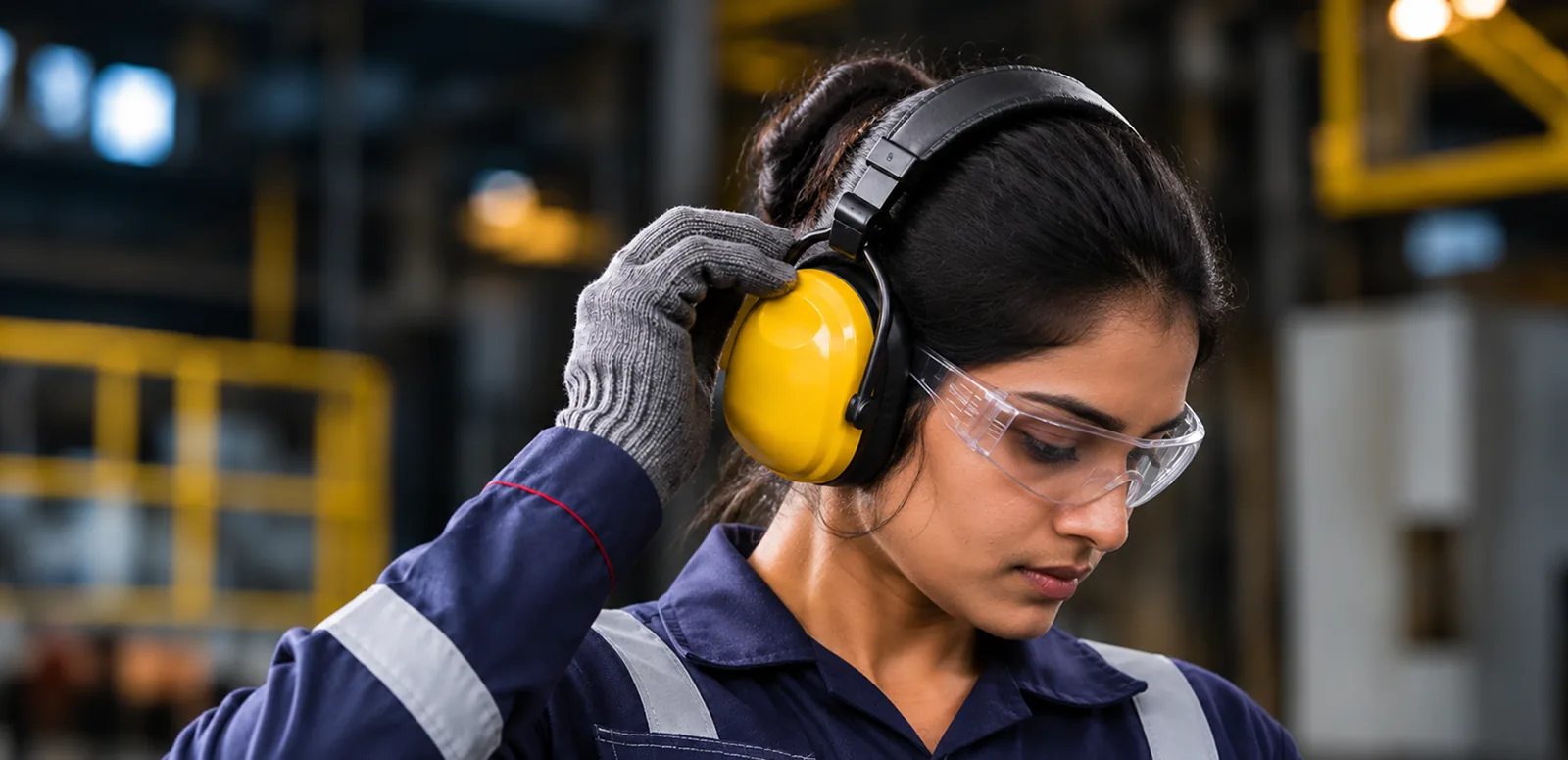
Ear muffs work like a pair of padded cups held gently over your ears. The cushions press against the side of your head to form a seal, and the cups absorb sound before it reaches your ear canal. Put them on properly and the roar of a concrete breaker drops to a level that is much easier on your ears.
What is the Advantage of Ear Muffs in the Workplace?
If you work on construction sites with a lot of noise, continuous exposure to these sounds can cause serious issues in your hearing and overall health. Here are the benefits you get with high-quality ear protection PPE:
Minimizes the Risk of Hearing Loss
Prolonged exposure to noise levels above 85dB can damage your hearing permanently. With ear muffs, you reduce the risk of developing hearing issues or permanent hearing loss.
Reduces Noise Exposure
Ear muffs create a proactive seal around your ears to reduce the intensity of loud sounds on construction sites. With less exposure to loud noises, you can engage in the work you are doing with greater confidence.
Improves Concentration
Construction sites require workers to exercise complete concentration, as even a small lapse of judgment can lead to a workplace accident or poor final quality. With ear muffs, workers are able to engage in their tasks with complete focus, leading to a smoother project completion.
Provides Comfort
Ear muffs feature proper cushioning, and they can be adjusted to match your exact fit. They have a lightweight design that makes them feel comfortable to wear.
Reduces Ear Fatigue
Auditory fatigue from heavy noise at construction sites is quite common, and it can make it difficult for you to relax when you get home, as the impact stays with you. Ear muffs keep the sound levels manageable, allowing you to show up to work without any fatigue.
Permissible Noise Exposure Limits According to OSHA
In India, state Factories Rules allow up to 90 dB(A) of noise over an 8-hour shift. That's the same limit the US Occupational Safety and Health Administration (OSHA) uses. OSHA goes a step further and asks employers to run a hearing conservation programme once workers are exposed to 85 dB(A) over 8 hours, which is why many companies hand out hearing protection from that point.
The louder it gets, the shorter the safe time. The table below shows OSHA's limits, and India's Factories Rules follow a similar scale. If noise on your site goes past these limits, workers need ear muffs or ear plugs.
| Sound Level (dB) | Maximum Exposure Duration |
|---|---|
| 90 dB | 8 hours |
| 92 dB | 6 hours |
| 95 dB | 4 hours |
| 97 dB | 3 hours |
| 100 dB | 2 hours |
| 102 dB | 1.5 hours |
| 105 dB | 1 hour |
| 110 dB | 30 minutes |
| 115 dB | 15 minutes or less |
What Factors May Impact the Effectiveness of Ear Muffs?
The performance of an ear muff in terms of noise reduction depends on many factors like its fit, noise reduction ratings, and how much time you wear them for at your workplace.
Proper Fit and Seal
Ear muffs must completely cover the ears, as it creates a tight seal which reduces the noise that comes into your ears.
Noise Reduction Rating (NRR)
Some ear muffs come with NRR ratings that indicate their noise-reduction potential. You may want to check that for your ear muffs before you buy them.
Wearing Time
If you wear ear muffs for a short time, their impact may not be as effective as you want. Make sure to keep the ear muffs on and avoid taking them off frequently.
Ear Muff Condition
If you use a low-quality ear muff or a damaged one, its performance will be significantly less effective.
Compatibility with Other PPE
Your hearing protection PPE must work seamlessly with other protective gear like safety helmets and goggles.
Workplace Noise Levels
Your ear muffs should offer protection against the standard noise level at your workplace. If you buy a low-quality one, its performance will also be subpar.
How to Choose the Right Ear Protection
When selecting ear protection PPE like an ear muff or an ear plug, you must ensure that it offers the kind of protection you need at your workplace. Here is how you can choose the right one:
1. Check the Noise Reduction Rating (NRR)
Most ear muffs come with a specific noise reduction rating, which is also known as NRR. This rating shows how effectively the ear muffs can reduce the impact of the noises that surround you all day. Choose ear muffs with an appropriate NRR by considering the exact noise levels at your workplace.
2. Consider Workplace Noise Levels
You should assess the noise from drilling machines, excavators, concrete mixers, and other construction equipment in your workspace. If possible, try to get an accurate measurement in dB to determine the sound levels you are exposed to all day. Based on this, you can choose an appropriate ear muff that works for you.
3. Choose the Right Fit and Size
The ear muff must fit comfortably, and it should cover your entire ear. And if you decide to go with an ear plug, make sure that it properly covers your ears.
4. Consider Durability
The ear muffs should be made with high-quality materials to make sure that they last a long time for you and can withstand demanding conditions at your construction site.
5. Ensure Compatibility with Other PPE
The ear muffs should work seamlessly with your overall PPE, like helmets, safety glasses, and face shields. Make sure that these different PPE items do not interfere with one another to cause problems for you in the workplace.
Conclusion
So, what is the advantage of ear muffs on a construction site? They lower the noise reaching your ears, help you stay focused and leave you less worn out at the end of the day. But they only do that if the rating suits your site, the fit is right and they stay on for as long as you're exposed.
Browse PERF's hearing protection range to find the right fit for your team.
Frequently Asked Questions
1. How effective are safety ear muffs in reducing workplace noise?
Safety ear muffs are helpful in reducing the intensity of loud noises that you have to deal with every day on your construction sites. They are an essential piece of hearing protection PPE that reduces the risk of developing hearing damage.
2. How long can workers wear safety ear muffs?
Workers should wear ear muffs throughout their shift to ensure that they are protected from the risk of hearing loss from high noises in the workplace.
3. How often should safety ear muffs be replaced?
It depends on their quality, performance, and the current condition. If your ear muff is damaged, we recommend replacing it right away. You may also need to change it of sound levels rise in the workplace and your current ear muff proves to be ineffective.
4. Are ear muffs better than earplugs for construction workers?
Not always. Ear muffs are quick to put on and easy to spot from a distance, which helps supervisors check they're being worn. Ear plugs are lighter, cooler in the heat and sit comfortably under a helmet. On very loud jobs, some workers wear both.
5. Are safety ear muffs suitable for outdoor construction work?
Yes. Ear muffs are ideal to wear for outdoor construction work, helping you minimize the noise coming from excavators, generators, concrete mixers, and other noisy equipment in the workplace.