In short
The Bureau of Indian Standards (BIS) has specified safety shoe IS codes to give you complete guidelines for footwear standards for the workplace. The safety shoes IS codes set out the footwear safety standards for workers in India.
Key takeaways
- The choice of the right safety footwear matters a lot to reduce the risk of foot injuries from workplace hazards.
- Always check the BIS standard mark before you buy the safety shoe.
- The safety footwear should fit securely around your feet, without causing any kind of pressure, friction, or discomfort.
- Look for the BIS Standard Mark (ISI Mark) printed or embossed on the safety footwear or its packaging.
- You should inspect the safety shoes before every use.
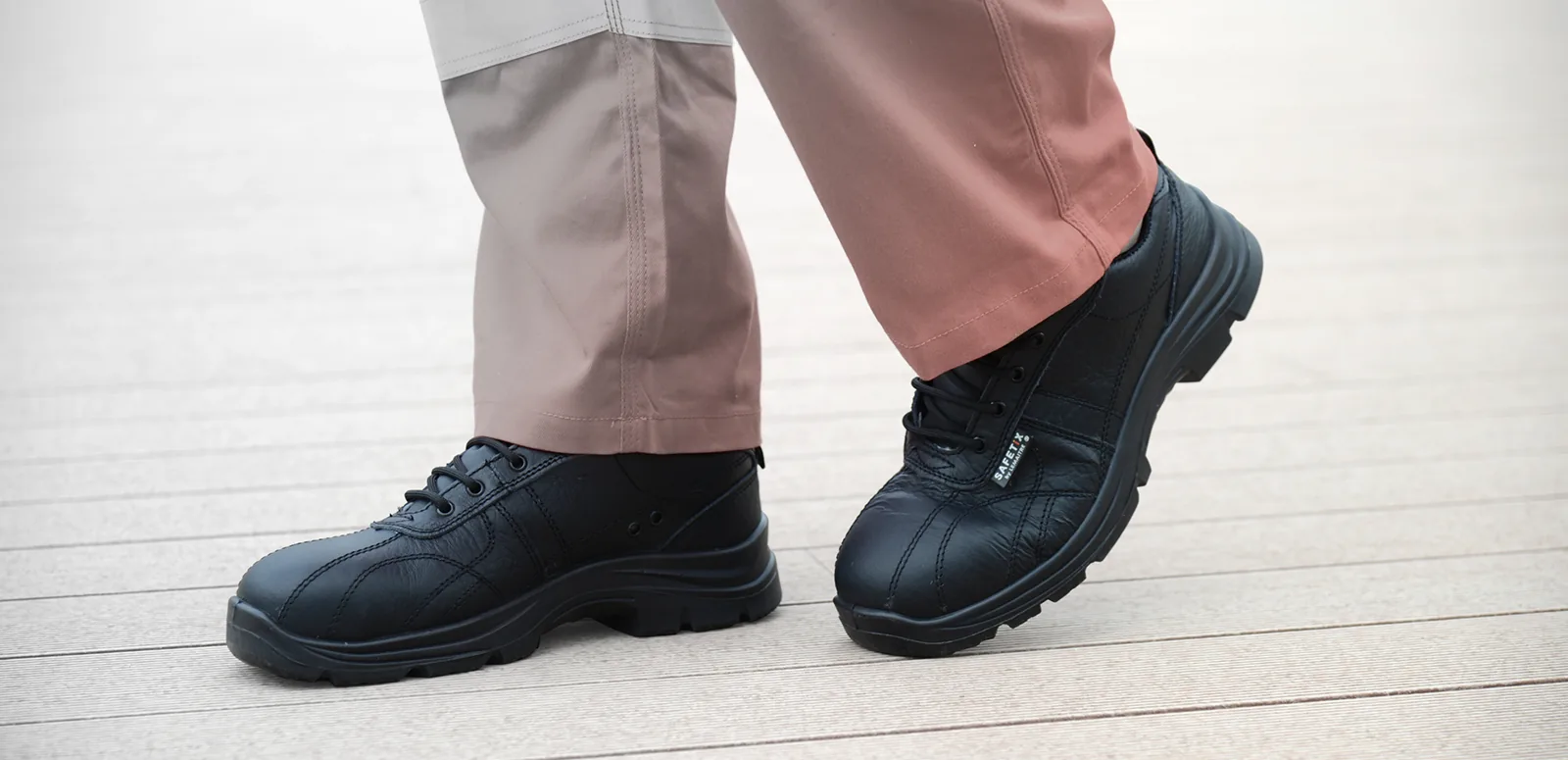
The choice of the right protective footwear matters for ensuring optimal workplace safety. You need footwear that meets recognised quality and performance requirements. Safety footwear protects workers from falling objects, sharp materials, slippery surfaces, electrical hazards, and other occupational risks.
The Bureau of Indian Standards (BIS) has specified safety shoe IS codes to give you complete guidelines for footwear standards for the workplace. The IS codes highlight requirements for safety, protective, and occupational footwear that safety shoe manufacturers must fulfil to get their BIS certification.
The comprehension of safety shoes' IS codes, BIS certification, and footwear markings enables you to select compliant footwear that safeguards you in the workplace.
Importance of Safety Footwear in the Workplace
High-quality safety footwear is an essential piece of PPE that helps minimise workplace injuries, protecting you from common hazards that may affect your feet.
Working in construction, manufacturing, mining, or warehouses can expose workers to hazards that include objects falling on them, sharp debris, slippery floors, and chemical exposure. Wearing proper safety footwear gives you essential protection that allows you to work with confidence.
Here are some of the benefits of choosing safety footwear:
- Protects toes against falling objects and compression injuries.
- Reduces the risk of slips.
- Prevents injuries from sharp objects.
- Provides resistance against workplace heat or chemicals
- Helps minimise electrical hazards.
Safety Shoes IS Codes by BIS
BIS, which stands for the Bureau of Indian Standards, provides guidelines for safety footwear manufacturing and testing as specified in the IS. Here's a quick look at some IS codes for footwear safety:
IS 1989 (Part 1):2026
This code specifies requirements for leather safety boots and shoes for miners. It's recommended for miners who have to navigate tough terrain. This footwear is ideal for underground as well as open-cast mining operations, where they shield workers from mechanical injuries.
IS 1989 (Part 2):2026
Workers in heavy metal industries, such as steel plants, foundries, and metal manufacturing, are best served by leather safety boots that comply with this code.
IS 3976:2018
This code specifies requirements for safety rubber canvas boots for miners. The boots' materials, construction, and testing are all encompassed.
IS 11226:1993
This code specifies requirements for leather safety footwear with directly moulded rubber soles. These safety shoes are suitable for people working in mines, oil refineries, fertiliser plants, or places that may be oily or slippery.
IS 14544:2022
This standard covers leather safety and protective footwear with direct moulded polymeric soles. The 2022 revision is no longer limited to PVC soles, so other polymeric soling materials are now included. The use of footwear under this standard extends to all industries, including oil fields, manufacturing units, warehouses, and workshops.
IS 15298 (Part 2):2024
This standard specifies requirements for safety footwear and is based on ISO 20345:2021. Safety shoes under this standard have toe caps that protect against impact and compression. Construction, mining, engineering, and warehouses are the usual applications for them.
IS 15298 (Part 3):2024
This standard covers protective footwear and is based on ISO 20346:2021. Its toe protection helps workers minimise foot injury risks from workplace hazards. These shoes are best suited for workers in the construction industry, mining, and industrial environments.
IS 5557 (Part 1):2024
This standard covers all-rubber gum boots and ankle boots for safety and protective use. It replaced IS 5557:2004, which covered industrial and protective rubber knee and ankle boots. The boots are employed in heavy industries, chemical works, mining, manufacturing, and workplaces with wet or contaminated floors.
IS 5557 (Part 2):2018
This code highlights guidelines for all-rubber gum boots and ankle boots intended for occupational purposes. These shoes are suitable for use in sewage treatment plants, chemical industries, and food processing units. The shoes are great for workers in tanneries, agriculture, construction, and petrochemical facilities as well.
IS 12254:2021
The requirements for PVC-based industrial boots used in the workplace are outlined in this safety shoe IS code. These boots find application in tanneries, food and beverage industries, and sewage treatment plants.
IS 16645:2018
This code specifies guidelines for lined and unlined polyurethane boots for general industrial use. These shoes have applications in chemical plants, food processing facilities, manufacturing units, agriculture, and fisheries.
IS 16994:2018
It provides requirements for footwear designed for men and women performing municipal scavenging work. The use of these shoes is recommended for the work of street cleaners, waste collectors, sanitation workers, and waste collection workers.
Footwear Markings Under Indian IS Standards
Footwear markings tell you what level of protection a shoe offers. They can also show how the shoe is built and which more safety features it has been certified for.
Under IS 15298 (Part 2):2024, safety shoes are classified according to their construction and the specific protective properties they offer. The standard follows ISO 20345:2021, which is the international standard for safety footwear, with modifications for Indian requirements.
Here are the common markings you may see on your safety footwear:
- SB: Basic safety footwear with protective toe-cap requirements.
- S1: Includes basic toe protection and antistatic properties. Also has energy absorption in the heel area.
- S2: Includes S1 features with more water penetration & absorption resistance in the upper part.
- S3: Combines S2 features with penetration-resistant midsole protection. It also has a cleated outsole.
- S3L: Provides S3-level protection with a non-metallic penetration-resistant insert. The insert has undergone PL testing.
- S3S: Provides S3-level protection with a non-metallic penetration-resistant insert which is tested to PS requirements.
- S4: Fully moulded rubber or polymer safety footwear with basic toe protection. It also has antistatic properties along with heel energy absorption.
- S5: Includes S4 features with penetration-resistant midsole protection and a cleated outsole.
- S6: Combines S2 features with water resistance of the complete footwear.
- S7: Combines S3 features with water resistance of the complete footwear.
Additional Safety Markings
| Marking | Meaning |
|---|---|
| A | Antistatic footwear |
| P | Metallic penetration-resistant insert |
| PL | Non-metallic penetration-resistant insert tested under PL requirements |
| PS | Non-metallic penetration-resistant insert tested under PS requirements |
| WPA | Water penetration and absorption resistance of the upper |
| WR | Water resistance of the complete footwear |
| E | Energy absorption in the heel area |
| HRO | Resistance to hot contact at the outsole |
| M | Metatarsal protection |
| AN | Ankle protection |
| CI | Cold insulation |
| HI | Heat insulation |
| CR | Cut resistance |
| SR | Additional slip resistance |
| FO | Resistance to fuel oil |
| LG | Ladder grip |
| SC | Scuff cap abrasion resistance |
| C | Conductive footwear |
| I | Electrically insulating footwear |
How to Select the Right Safety Footwear
The choice of the right safety footwear matters a lot to reduce the risk of foot injuries from workplace hazards. Before you buy shoes, make sure to consider these things:
Identify the Workplace Hazard
Assess your workplace to identify potential hazards such as falling objects, slippery surfaces, and chemicals that may affect your feet. Based on the hazards you have to deal with daily, you can choose the right safety footwear that matches your requirements.
Check Applicable IS Standards
Make sure that the footwear you select complies with the BIS standards. For example, if you want a shoe to wear when doing construction work, check that it meets IS 15298 (Part 2) for safety footwear. Always check the BIS standard mark before you buy the safety shoe.
Choose the Right Toe Protection
The right toe protection is essential to minimise risks when working in hazardous environments. You can select shoes with steel, composite, or other types of protective toe caps to reduce the risk of injuries.
Ensure Proper Fit
The safety footwear should fit securely around your feet, without causing any kind of pressure, friction, or discomfort. The shoe should offer enough cushioning and ankle support, enabling you to stand or work while maintaining comfort & balance.
How to Verify the Applicable BIS Certification for Safety Footwear
Before you buy a safety shoe, you must check the product's certification details, relevant IS standard, and manufacturer information. This helps you make sure you choose a durable product that meets your safety preferences.
- Check the BIS Standard Mark: Look for the BIS Standard Mark (ISI Mark) printed or embossed on the safety footwear or its packaging. The product has been tested in accordance with the relevant Indian Standard.
- Verify the IS Standard Number: Check whether the footwear carries the correct IS standard number. For example, IS 15298 covers safety, protective, and occupational footwear.
- Check the CM/L Licence Number: Look for the CM/L number displayed alongside the BIS Standard Mark. This licence number identifies the manufacturer & the specific product certification issued by BIS.
- Verify Certification on the BIS Portal: Visit the official BIS website and use its certification or licence search facility to verify the manufacturer's licence number & certification status.
- Check Licence Validity: Verify that the BIS licence is active and not expired, suspended, or cancelled. Avoid buying products carrying certification details that can't be verified.
Conclusion
The safety shoes IS codes set out the footwear safety standards for workers in India. Knowing them helps you choose the right level of protection for your feet. Pick safety footwear that matches the hazards at your workplace, whether that's impact, slips, sharp objects or chemical exposure.
Explore our range of protective footwear to find the right pair for your work.
Frequently Asked Questions
What's IS 15298 for safety footwear?
The Indian Standard IS 15298 provides guidelines for safety, protective, and occupational footwear. The standard specifies safety features such as protective toe caps, slip resistance, and durability. Part 2 covers safety footwear, Part 3 protective footwear and Part 4 occupational footwear.
What do S1 to S7 markings mean on safety shoes?
S1 to S7 markings show different safety footwear classifications under relevant standards. They identify protective features such as toe protection, antistatic properties, water resistance, penetration resistance, and sole performance.
How can I verify BIS certification for safety shoes?
Check the BIS Standard Mark (ISI Mark) on the shoe or its packaging. The BIS website offers information on licence details as well.
Are BIS-certified safety shoes mandatory in India?
Yes. Compliance with the relevant Indian Standard is mandatory for footwear covered by compulsory BIS certification. The BIS Standard Mark is mandatory for the sale of these shoes in India.
How often should you change your safety shoes?
You should inspect the safety shoes before every use. You should replace the shoes when toe caps, soles, stitching, or protective components become damaged or worn.